Balanced Binary Tree(平衡二叉树)
题目 / Problem
中文: 给定一棵二叉树,判断它是否为高度平衡二叉树。
高度平衡二叉树是指:树中每个节点的左子树与右子树的高度差都不超过 1。
A height-balanced binary tree is one in which the left and right subtrees of every node differ in height by no more than 1.
English: Given a binary tree, determine if it is height-balanced.
示例 / Examples
Example 1
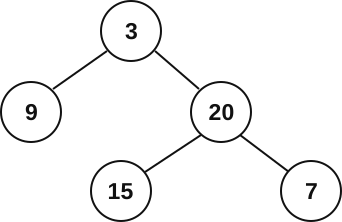
Input:  root = [3,9,20,null,null,15,7]
Output: true
        3
       / \
      9  20
         / \
        15  7
每个节点的左右子树高度差都不超过 1,因此返回 true。
The height difference between the left and right subtrees of every node is at most 1, so return true.
Example 2
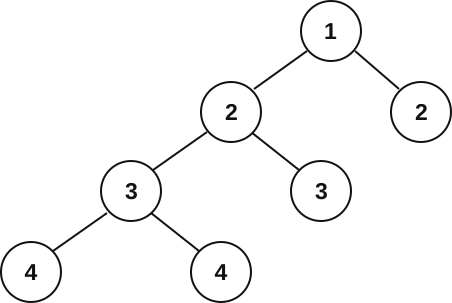
Input:  root = [1,2,2,3,3,null,null,4,4]
Output: false
          1
         / \
        2   2
       / \
      3   3
     / \
    4   4
根节点 1 的左子树高度为 3,右子树高度为 1,高度差为 2,因此返回 false。
At the root node 1, the left subtree has height 3 and the right subtree has height 1. Their difference is 2, so return false.
Example 3
Input:  root = []
Output: true
空树没有任何失衡节点,因此属于平衡二叉树。
An empty tree has no unbalanced node, so it is height-balanced.
约束 / Constraints
- 树中的节点数在
[0, 5000]范围内。
The number of nodes in the tree is in the range[0, 5000]. -10⁴ <= Node.val <= 10⁴
解题思路:自底向上的后序遍历 / Approach: Bottom-Up Postorder Traversal
判断一个节点是否平衡,需要先知道它左右子树的高度。因此应使用后序遍历,先处理左子树和右子树,再处理当前节点。
To determine whether a node is balanced, the heights of its left and right subtrees must be known first. Postorder traversal therefore processes both subtrees before the current node.
辅助函数 getHeight(node) 有两种返回结果:
The helper function getHeight(node) returns one of two kinds of values:
- 如果以
node为根的子树平衡,返回它的实际高度。
If the subtree rooted atnodeis balanced, return its actual height. - 如果子树中已经出现失衡,返回特殊值
-1。
If an unbalanced node has been found, return the sentinel value-1.
对于每个节点:
For each node:
- 递归计算左子树高度。如果返回
-1,立即向上传递-1。
Recursively calculate the left subtree's height. If it returns-1, propagate-1immediately. - 递归计算右子树高度。如果返回
-1,同样立即返回-1。
Calculate the right subtree's height. If it returns-1, return-1immediately. - 如果左右高度差大于
1,当前节点失衡,返回-1。
If the height difference exceeds1, the current node is unbalanced, so return-1. - 否则返回当前子树高度
Math.max(leftHeight, rightHeight) + 1。
Otherwise, return the current subtree's height:Math.max(leftHeight, rightHeight) + 1.
最终只需判断根节点的计算结果是否为 -1。
Finally, check whether the result for the root is -1.
JavaScript 实现 / JavaScript Implementation
/**
 * Definition for a binary tree node.
 * function TreeNode(val, left, right) {
 *   this.val = val ?? 0;
 *   this.left = left ?? null;
 *   this.right = right ?? null;
 * }
 */

/**
 * @param {TreeNode} root
 * @return {boolean}
 */
function isBalanced(root) {
  function getHeight(node) {
    if (node === null) {
      return 0;
    }

    const leftHeight = getHeight(node.left);
    if (leftHeight === -1) {
      return -1;
    }

    const rightHeight = getHeight(node.right);
    if (rightHeight === -1) {
      return -1;
    }

    if (Math.abs(leftHeight - rightHeight) > 1) {
      return -1;
    }

    return Math.max(leftHeight, rightHeight) + 1;
  }

  return getHeight(root) !== -1;
}
执行过程 / Walkthrough
以 Example 2 为例,后序遍历从叶子节点开始向上计算高度:
For Example 2, postorder traversal calculates heights upward from the leaf nodes:
| 节点 / Node | 左子树高度 / Left | 右子树高度 / Right | 结果 / Result |
|---|---|---|---|
左侧的 3 | 1 | 1 | 高度 2 / Height 2 |
另一个 3 | 0 | 0 | 高度 1 / Height 1 |
左侧的 2 | 2 | 1 | 高度 3 / Height 3 |
右侧的 2 | 0 | 0 | 高度 1 / Height 1 |
1 | 3 | 1 | 高度差为 2,返回 -1 / Difference is 2; return -1 |
根节点得到 -1,所以整棵树不平衡。
The root produces -1, so the entire tree is unbalanced.
复杂度 / Complexity
设树中有 n 个节点,树高为 h。
Let the tree contain n nodes and have height h.
- 时间复杂度:
O(n),每个节点最多访问一次。
Time:O(n), because each node is visited at most once. - 空间复杂度:
O(h),空间主要由递归调用栈占用。
Space:O(h), primarily for the recursion stack.- 平衡树中为
O(log n)。
It isO(log n)for a balanced tree. - 树退化为链表时,最坏为
O(n)。
It isO(n)in the worst case for a skewed tree.
- 平衡树中为
为什么不对每个节点单独计算高度? / Why Not Calculate Every Height Separately?
一种直观做法是:对每个节点分别调用高度函数,再检查左右子树高度差。这会重复遍历相同的子树。
A straightforward approach calls a separate height function for every node and compares its subtree heights. This repeatedly traverses the same subtrees.
function isBalancedSlow(root) {
  function height(node) {
    if (node === null) return 0;
    return Math.max(height(node.left), height(node.right)) + 1;
  }

  if (root === null) return true;

  return (
    Math.abs(height(root.left) - height(root.right)) <= 1 &&
    isBalancedSlow(root.left) &&
    isBalancedSlow(root.right)
  );
}
在退化二叉树中,这种方法的时间复杂度可能达到 O(n²)。自底向上的解法让每个节点只计算一次,将时间复杂度优化为 O(n)。
For a skewed tree, this approach can take O(n²) time. The bottom-up solution calculates each node only once and reduces the time complexity to O(n).
易错点 / Common Pitfalls
- 平衡条件必须对树中的每个节点成立,不能只检查根节点。
The balance condition must hold at every node, not only at the root. - 高度差的绝对值必须不超过
1。
The absolute height difference must not exceed1. - 空树的高度是
0,并且空树是平衡的。
An empty tree has height0and is balanced. -1是表示“已经失衡”的特殊值,不是正常的子树高度。-1is a sentinel meaning “already unbalanced,” not a valid subtree height.- 发现子树失衡后应立即返回,避免继续进行无意义的计算。
Return immediately after detecting an unbalanced subtree to avoid unnecessary work.