01 Matrix(01 矩阵)
题目 / Problem
中文: 给定一个 m × n 的二进制矩阵 mat,返回一个同样大小的矩阵,其中每个位置保存该单元格到最近的 0 的距离。
两个共享一条边的单元格之间距离为 1。因此只能向上、下、左、右移动,不能沿对角线移动。
English: Given an m × n binary matrix mat, return the distance of the nearest 0 for each cell.
The distance between two cells sharing a common edge is 1. Movement is therefore allowed only up, down, left, and right, not diagonally.
示例 / Examples
Example 1
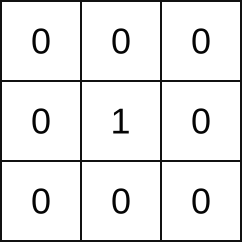
Input:  mat = [[0,0,0],
               [0,1,0],
               [0,0,0]]

Output:       [[0,0,0],
               [0,1,0],
               [0,0,0]]
中心位置的 1 与四周任意一个 0 都只相隔一条边,所以距离为 1。
The center 1 is one edge away from each adjacent 0, so its distance is 1.
Example 2
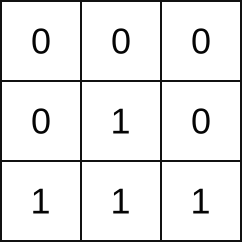
Input:  mat = [[0,0,0],
               [0,1,0],
               [1,1,1]]

Output:       [[0,0,0],
               [0,1,0],
               [1,2,1]]
最下方中间位置 (2,1) 到最近的 0 需要移动两步,例如 (2,1) → (1,1) → (0,1),因此距离为 2。
The bottom-middle cell (2,1) needs two moves to reach the nearest 0, for example (2,1) → (1,1) → (0,1), so its distance is 2.
约束 / Constraints
m == mat.lengthn == mat[i].length1 <= m, n <= 10⁴1 <= m × n <= 10⁴mat[i][j]为0或1。mat[i][j]is either0or1.mat中至少存在一个0。
There is at least one0inmat.
解题思路一:多源 BFS / Approach 1: Multi-Source BFS
如果从每个值为 1 的位置分别搜索最近的 0,会重复遍历大量单元格。更高效的方式是反向思考:
Searching separately from every 1 for its nearest 0 repeatedly visits many cells. Instead, reverse the perspective:
将所有值为
0的位置同时作为 BFS 起点,逐层向外扩散。
Use every0cell as a BFS source and expand outward level by level.
所有 0 到自身的距离都是 0。多源 BFS 第一次到达某个 1 时,走过的步数一定是该位置到任意 0 的最短距离。
Every 0 has distance 0 from itself. The first time multi-source BFS reaches a 1, the number of steps taken is its shortest distance to any 0.
初始化 / Initialization
- 创建距离矩阵
distances,所有位置初始化为-1,表示尚未访问。
Createdistancesand initialize every cell to-1, meaning unvisited. - 遍历矩阵,将所有值为
0的位置距离设为0,并全部加入队列。
Scan the matrix, set every0cell's distance to0, and enqueue all of them.
BFS 扩散 / BFS Expansion
每次从队列中取出 (row, col),检查四个相邻位置。如果相邻位置合法且仍为 -1:
Dequeue (row, col) and inspect its four neighbors. If a neighbor is in bounds and still equals -1:
neighborDistance = distances[row][col] + 1
设置距离后立即加入队列。一个位置只会被首次到达并入队一次。
Set its distance and enqueue it immediately. Every cell is reached and enqueued only once.
JavaScript 实现 / JavaScript Implementation
/**
 * @param {number[][]} mat
 * @return {number[][]}
 */
function updateMatrix(mat) {
  const rows = mat.length;
  const cols = mat[0].length;
  const distances = Array.from(
    { length: rows },
    () => new Array(cols).fill(-1),
  );
  const queue = [];
  let front = 0;

  for (let row = 0; row < rows; row++) {
    for (let col = 0; col < cols; col++) {
      if (mat[row][col] === 0) {
        distances[row][col] = 0;
        queue.push([row, col]);
      }
    }
  }

  const directions = [
    [-1, 0],
    [1, 0],
    [0, -1],
    [0, 1],
  ];

  while (front < queue.length) {
    const [row, col] = queue[front++];

    for (const [rowOffset, colOffset] of directions) {
      const nextRow = row + rowOffset;
      const nextCol = col + colOffset;

      if (
        nextRow >= 0 &&
        nextRow < rows &&
        nextCol >= 0 &&
        nextCol < cols &&
        distances[nextRow][nextCol] === -1
      ) {
        distances[nextRow][nextCol] = distances[row][col] + 1;
        queue.push([nextRow, nextCol]);
      }
    }
  }

  return distances;
}
这里使用 front 索引读取队列,没有使用 JavaScript 数组的 shift()。shift() 可能在每次调用时移动剩余元素,导致额外开销。
The front index reads from the queue instead of using JavaScript's shift(), which may move the remaining elements on every call.
执行过程 / Walkthrough
以 Example 2 为例:
For Example 2:
第 0 层:所有 BFS 起点 / Level 0: All BFS Sources
0  0  0
0  ·  0
·  ·  ·
所有 0 同时进入队列,距离为 0。符号 · 表示尚未访问。
All 0 cells enter the queue with distance 0. The symbol · means unvisited.
第 1 层:与任意 0 相邻的位置 / Level 1: Adjacent to Any Zero
0  0  0
0  1  0
1  ·  1
这些位置第一次从某个 0 到达,所以距离为 1。
These cells are first reached from a 0, so their distance is 1.
第 2 层:剩余位置 / Level 2: Remaining Cell
0  0  0
0  1  0
1  2  1
最下方中间位置从距离为 1 的位置扩散得到,因此距离为 2。
The bottom-middle cell is reached from a cell at distance 1, so its distance is 2.
为什么第一次到达就是最短距离? / Why Is the First Visit the Shortest?
BFS 按距离从小到大逐层访问节点。多源 BFS 等价于创建一个虚拟起点,并让它以距离 0 连接所有原始 0。
BFS visits nodes level by level in nondecreasing distance order. Multi-source BFS is equivalent to adding a virtual source connected at distance 0 to every original 0.
因此,一个位置第一次被访问时,所有更短的可能路径都已经被处理;它不可能在之后找到更短的距离。
Therefore, when a cell is first visited, every possible shorter path has already been considered, and no later path can improve its distance.
BFS 复杂度 / BFS Complexity
设矩阵共有 m × n 个单元格。
Let the matrix contain m × n cells.
- 时间复杂度:
O(mn),每个单元格最多入队和出队一次。
Time:O(mn), because every cell is enqueued and dequeued at most once. - 空间复杂度:
O(mn),距离矩阵和队列最多保存所有单元格。
Space:O(mn), because the distance matrix and queue may contain all cells.
解题思路二:两遍动态规划 / Approach 2: Two-Pass Dynamic Programming
一个位置到最近 0 的路径可能从四个方向到达。可以使用两次扫描分别覆盖这些方向:
A shortest path to a 0 may arrive from any of four directions. Two scans can cover all directions:
- 从左上到右下扫描,利用上方和左方的结果。
Scan from top-left to bottom-right, using top and left neighbors. - 从右下到左上扫描,利用下方和右方的结果。
Scan from bottom-right to top-left, using bottom and right neighbors.
function updateMatrixDP(mat) {
  const rows = mat.length;
  const cols = mat[0].length;
  const maxDistance = rows + cols;
  const distances = Array.from(
    { length: rows },
    () => new Array(cols).fill(maxDistance),
  );

  for (let row = 0; row < rows; row++) {
    for (let col = 0; col < cols; col++) {
      if (mat[row][col] === 0) {
        distances[row][col] = 0;
        continue;
      }

      if (row > 0) {
        distances[row][col] = Math.min(
          distances[row][col],
          distances[row - 1][col] + 1,
        );
      }

      if (col > 0) {
        distances[row][col] = Math.min(
          distances[row][col],
          distances[row][col - 1] + 1,
        );
      }
    }
  }

  for (let row = rows - 1; row >= 0; row--) {
    for (let col = cols - 1; col >= 0; col--) {
      if (row < rows - 1) {
        distances[row][col] = Math.min(
          distances[row][col],
          distances[row + 1][col] + 1,
        );
      }

      if (col < cols - 1) {
        distances[row][col] = Math.min(
          distances[row][col],
          distances[row][col + 1] + 1,
        );
      }
    }
  }

  return distances;
}
初始大值使用 rows + cols 即可,因为矩阵内任意两点之间的曼哈顿距离不会达到该值。rows + cols is a sufficient initial upper bound because the Manhattan distance between any two matrix cells is smaller than this value.
- 时间复杂度 / Time:
O(mn) - 空间复杂度 / Space:
O(mn),用于返回距离矩阵。
The returned distance matrix usesO(mn)space.
BFS 与动态规划对比 / BFS vs. Dynamic Programming
| 方法 / Method | 时间 / Time | 空间 / Space | 核心思想 / Key Idea |
|---|---|---|---|
| 多源 BFS | O(mn) | O(mn) | 从所有 0 同时逐层扩散 / Expand from all zeros simultaneously |
| 两遍 DP | O(mn) | O(mn) | 两种扫描方向覆盖四个邻居 / Two scan directions cover four neighbors |
多源 BFS 的最短路含义更直接,也更容易推广到带障碍物或不规则图结构。
Multi-source BFS has a more direct shortest-path interpretation and generalizes more naturally to obstacles or irregular graph structures.
与 Map of Highest Peak 的关系 / Relation to Map of Highest Peak
本题与 LeetCode 1765 Map of Highest Peak 使用相同的多源 BFS 框架:将所有特殊位置作为距离或高度为 0 的起点,再逐层向外扩散。
This problem and LeetCode 1765, Map of Highest Peak, use the same multi-source BFS framework: initialize all special cells at distance or height 0, then expand outward level by level.
易错点 / Common Pitfalls
- 必须将所有
0同时加入初始队列,而不是只选择一个0。
Enqueue every0initially, not just one of them. - 只能向上、下、左、右移动,不能计算对角线距离。
Move only up, down, left, and right; diagonals do not count. - 应在位置加入队列时立即标记距离,避免它被重复入队。
Assign a distance when enqueuing a cell to prevent duplicate enqueue operations. - 不要从每个
1分别运行一次 BFS,否则最坏时间复杂度会非常高。
Do not run a separate BFS from every1, which can be prohibitively expensive. - 使用
-1区分“未访问”和合法距离0。
Use-1to distinguish unvisited cells from the valid distance0. - 两遍 DP 的扫描方向必须相反,才能覆盖来自四个方向的最短路径。
The two DP scans must use opposite directions to account for shortest paths arriving from all four sides.